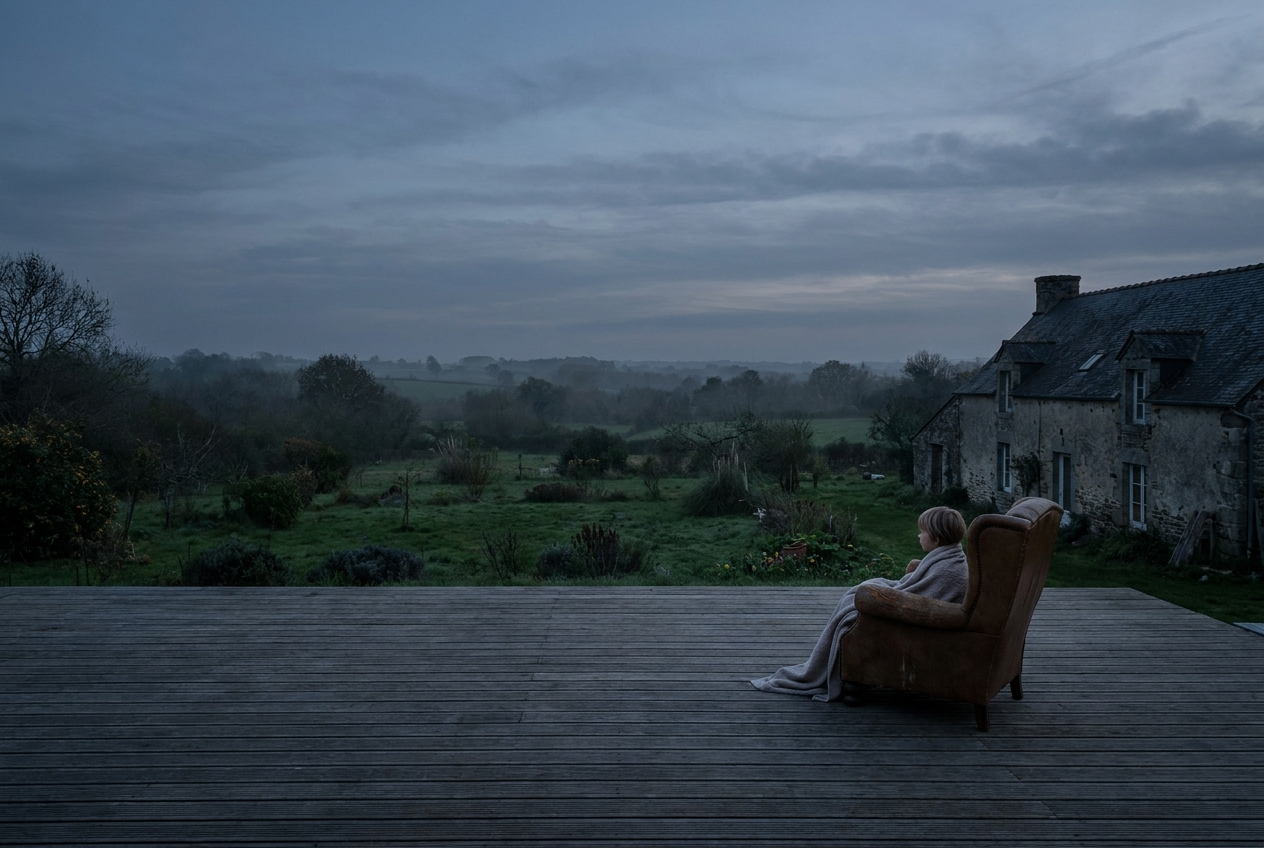
You are reading this at night because the child who used to talk your ear off has gone quiet, sleeps for hours and is still flat and exhausted, and cannot get through the school gate any more. Someone has told you it is “just behaviour” or “school refusal”, and a part of you knows that is wrong. You are being told to push them through, and your gut is screaming not to. Trust the gut. This is most likely autistic burnout, and pushing is exactly the thing that deepens it.
What is autistic burnout, and how is it different from just being tired?
Autistic burnout is a long-running state of exhaustion, loss of skills your child used to have, and a much lower tolerance for everyday noise, people and demands. It comes from months of stress and a mismatch between what the world asks and what your child can give, without enough support (Raymaker et al. 2020; National Autistic Society). It is not a phase, naughtiness or your child “going backwards” on purpose.
The piece that tells it apart from ordinary tiredness is the loss of skills. A child in burnout can stop being able to do things they could do a month ago: speaking, getting dressed, handling a bus, coping with a busy room. The researcher Dorothy Raymaker, in the 2020 study that first mapped this from autistic people's own accounts, described three core parts: deep exhaustion, that skill loss, and a body and brain that can no longer filter out sensory and social overload.
People often mix it up with depression, and that mix-up matters because it leads to the wrong response. The two overlap (low mood, withdrawing, feeling hopeless) and they can happen at the same time. But burnout is driven by accumulated demand and masking, not first and foremost by a mood disorder. Treat the low mood seriously. Also take the load off. Antidepressants alone will not fix a child who is drowning in demands.
Most of what is written about autistic burnout is about adults. Children get it too.
A nine-year-old can hit the same wall as a thirty-year-old, and they have far less language to tell you what is happening.
Why did this happen now?
Burnout is the bill for a long stretch of over-demand, not one bad week. The engine underneath it is usually masking: working flat out all day to look and act non-autistic, holding in the flapping and the fidgeting and the need to move, performing “fine” for teachers and friends. The child who is “no trouble at school” is often the child masking hardest, then coming apart the second they are safe at home.
On top of masking sits the sheer sensory and social load of a school day: the noise of a corridor at change-over, strip lighting, unstructured playtimes, the social maths of who to sit with, and changes nobody warned them about. The National Autistic Society's guidance for parents lists the same drivers, and adds the “barriers to relief” Raymaker named: no quiet space, support asked for and refused, being disbelieved when they said they were struggling.
There is often a trigger that tips a managing child into a burnt-out one. A new school year. A change of teacher. A house move. A bereavement. The move up to secondary, with five teachers instead of one and a building three times the size. If you are wondering why now, look back a few months. The cause is rarely today.
What do I actually do in the first days and weeks?
Recovery is three things: rest, far fewer demands, and proper adjustments. It is not pushing through, and it is not a clever behaviour plan. This is the one thing to take from the whole article. Your job for the next while is to take weight off your child, not to add structure to make them cope.
Take the demands right down
Drop the after-school clubs. Drop the homework battle (email the teacher and say so). Cut social obligations, birthday parties, the supermarket trip with them in tow. Reduce the number of decisions they have to make in a day, even small ones. The National Autistic Society calls this energy accounting: work out the biggest drains on your child's energy and remove them, then spread what is left thinly across the week.
Let them unmask
Burnout recovery needs the mask off. That means letting them stim, sink into a special interest for hours, wear the same soft clothes, communicate in few words or none, and skip the eye contact. None of this is regression or indulgence. It is the rest. A quiet, low-light corner at home, ear defenders within reach, a predictable shape to the day with as few surprises as you can manage: these do more than any reward.

Here is the part most parents get told to do and shouldn't. Reward charts, consequences, taking away the tablet, the “come on, you can do it” pep talk, marching them into school: every one of these reads the skill loss as defiance and piles on more demand. They make burnout worse. Schools will often say “he just needs firm boundaries and to get back into routine”. What that usually means is they have read a shutdown as a behaviour to manage, and the firmest possible boundary is the last thing a burnt-out child can survive.
Recovery is real. It is also slow, and it is not a straight line. Think weeks to months, with good days that fool you and bad days that scare you. A child who seems brighter on Tuesday is not “better” and ready for full school on Wednesday.
If your child has trouble with sensory overload, you can ask their school for practical help with it now. See whether your child can have a quiet space at school for sensory breaks.
What does the law say if my child can't get to school?
If burnout stops your child attending, the council has a legal duty to arrange suitable education for them, and the school has to make reasonable adjustments. A burnt-out child who cannot face school is not a truant. What you are seeing is usually called EBSA (emotionally based school avoidance): the body refusing a place that has become unbearable, driven by sensory overload and masking fatigue. It is not manipulation, and the word “refusal” misframes the whole thing.
Start by asking the school for adjustments. Schools have to make reasonable adjustments for disabled pupils, and autistic children are covered (s.20, Equality Act 2010). In plain terms you can ask for a quiet space, a pass to leave a room when overloaded, reduced work, and a short-term reduced timetable as a stepping stone (not a destination). The SEND Code of Practice 2015 expects schools to use the “graduated approach”: assess, plan, do, review, and keep adjusting.
If your child has an EHC plan (their legally binding support plan, the one the council writes and has to fund), you can ask for an early annual review to update it for this new level of need. If they don't have a plan and you think they may need one, you can ask the council to carry out an EHC needs assessment yourself (s.36, Children and Families Act 2014). See how to apply for an EHCP for your child.
If your child cannot attend by reason of illness or otherwise, the council has to arrange suitable education for them, which can be education otherwise than at school (s.19, Education Act 1996).
That s.19 duty is the load-bearing one, the thing to point at when the conversation turns to fines and registers. For some burnt-out children, schooling from home or in a small alternative setting for a period is exactly the rest they need. See whether you can get EOTAS instead of school for your autistic child. On fines: where the absence is about health, get your GP to write something and ask the school to record it appropriately rather than as unauthorised. You can read more on whether you can be fined for non-attendance when your child has SEND. And you can ask whether the school is legally required to make reasonable adjustments in the first place.
What changes if you name it EBSA instead of refusal
- School refusal puts the problem in the child and points at attendance enforcement and your responsibility for getting them in.
- EBSA puts the problem in the gap between the school environment and your child's needs, which is the school's and the council's to close, through adjustments and the s.19 duty.
- The same child, the same morning at the bottom of the stairs. Only the word, and therefore whose job it becomes, has changed.
When and how do I get medical help?
Start with the GP, both to rule out physical causes and to get the picture on paper. Sleep problems, pain, an underactive thyroid, an infection and other physical things can all look like burnout, so ask the GP to check. The same appointment gives you a letter that helps school and any later referral.
Ask for a referral to CAMHS (the NHS mental health service for children) if there is significant low mood, any risk, or you need a proper mental-health assessment. Two honest warnings. CAMHS waits are often long. And not every clinician knows autistic burnout, so bring the National Autistic Society guidance and the Raymaker framing with you and be ready to explain it. Burnout and depression can co-exist, so do not let anyone wave away low mood just because burnout is in the picture.
Watch for, and act on, talk of not wanting to be here, self-harm, or a settled hopelessness that does not lift. These are emergencies, not behaviour. The crisis lines are in the footer below, and if your child is in immediate danger you call 999.
One practical thing that strengthens every referral and review: keep a short log. A few lines a day on sleep, on which skills have slipped, on what set off a bad patch. It turns “he's just not himself” into evidence a clinician or a SENDCO can act on.
What about me? I'm running on empty too.
You can ask the council to assess your own needs as a parent carer, and they have to do it. This is a parent carer needs assessment, and it is a legal route many parents never hear about (s.97, Children and Families Act 2014). It looks at the support you need to keep caring, and it can open the door to practical help.
Councils also have to provide a range of short breaks for carers of disabled children, and to publish a short breaks services statement saying what is on offer in your area (Breaks for Carers of Disabled Children Regulations 2011). Ask for that statement by name. On money, look at Carer's Allowance and Disability Living Allowance for your child where you might be eligible, and the charities Carers UK and Contact for benefits and practical help. You can check whether you are entitled to Carer's Allowance for caring for your SEND child.
None of this is indulgence. You are the recovery environment. A parent who is rested and not drowning is the single biggest thing a burnt-out child has going for them. If you are scared at 2am, the YoungMinds Parents Helpline (0808 802 5544, weekdays) exists for exactly that call.
How do I stop this happening again?
Aim for a life shaped around your child so the demand never outruns the support again. The adjustments that got them through burnout are not a temporary patch to remove once they look brighter. Downtime, unmasking and a manageable load are ongoing needs, the way glasses are for a short-sighted child.
Get the recovery learning written into the EHC plan or support plan, in specific words, so it survives a change of teacher, head, or school. A plan that just says “sensory needs” gets ignored. A plan that says “access to a named low-arousal space at any point in the day, on request, without needing to explain why” gets followed.
Look ahead, too. From Year 9, reviews should start planning for adulthood (Preparing for Adulthood), and an EHC plan can carry on to age 25 where a young person still needs education or training to meet their outcomes (SEND Code of Practice 2015). See whether your child can stay in education until 25 with an EHCP.
On the headlines: the 2026 Schools White Paper sets a direction of narrowing EHC plans to the most complex needs over the next decade. The detail that matters tonight is that nothing changes before September 2030, and current plan holders are protected to the end of their education phase (Schools Week, 2026). So act on the plan you have, and the rights you have, now.
What to do this week
- Cancel everything you can. Clubs, homework, the weekend plans. Protect long stretches of unmasked downtime and say yes to the special interest.
- Email the school's SENDCO (the teacher in charge of special needs). Ask for reasonable adjustments and, if attendance has stopped, name the council's s.19 duty in writing.
- Book the GP. Ask them to rule out physical causes and to put the picture in a letter for school.
- Start a one-line-a-day log: sleep, skills lost, what triggered a bad patch.
- Ask the council for a parent carer needs assessment and for the short breaks services statement.
If you do only one thing
Stop the pushing. Take the demands off, today. Everything else (the letters, the assessments, the plan) can start this week and run for months. The rest cannot start until the pressure comes off, and your child cannot begin to recover while they are still being asked to perform.
Where the law and the evidence come from
- Raymaker et al. (2020), “Having All of Your Internal Resources Exhausted Beyond Measure”, Autism in Adulthood 2(2). The study that defined autistic burnout from autistic people's own accounts.
- National Autistic Society, autistic fatigue and burnout guidance for parents and for professionals (2020, 2022).
- Education Act 1996, s.19 (council's duty to arrange suitable education when a child cannot attend).
- Equality Act 2010, s.20 (reasonable adjustments for disabled pupils).
- Children and Families Act 2014, s.36 (right to ask for an EHC needs assessment) and s.97 (parent carer needs assessment).
- Breaks for Carers of Disabled Children Regulations 2011 (short breaks and the short breaks services statement).
- SEND Code of Practice 2015 (the graduated approach and Preparing for Adulthood, EHC plans to 25).
- Schools Week (2026) on the Schools White Paper and EHC plan protections to September 2030.
This article is general information, not a clinical or legal opinion. It has been reviewed by a qualified UK SENDCO but does not replace advice from your GP, your child's school, or a qualified solicitor on your specific case.
If you or your child need help now: Samaritans 116 123 (free, 24/7). YoungMinds Parents Helpline 0808 802 5544 (Mon to Fri, 9:30am to 4pm). Papyrus HOPELINE247 0800 068 4141 (for under-35s and anyone worried about them). Shout text 85258 (24/7 text support). If your child is in immediate danger, call 999 or go to A&E.
About the reviewer

Emma Owen
Owner of The SEN Support Studio
Former Local Authority SEN Advisor & specialist SEN teacher · 6+ years across SEN
Emma has 6+ years' experience across SEN as a teacher, Local Authority SEN Advisor and Trainer, and specialist SEN teacher. She has supported families through EHCPs, Annual Reviews, and tribunals, as well as sensory deep dives and personalised SEN Support. She works daily with complex needs including Autism, ADHD, SLCN, and sensory differences, and offers clear, practical, and personalised guidance to help parents understand their child and take confident next steps.
Scope of review: Emma reviews Remarkable Minds's content on EHCPs, annual reviews, transitions, sensory support, and parent advisory topics. She does not provide legal advice on tribunal proceedings; for that, contact IPSEA or SOSSEN.
Reviewed by Emma Owen ·