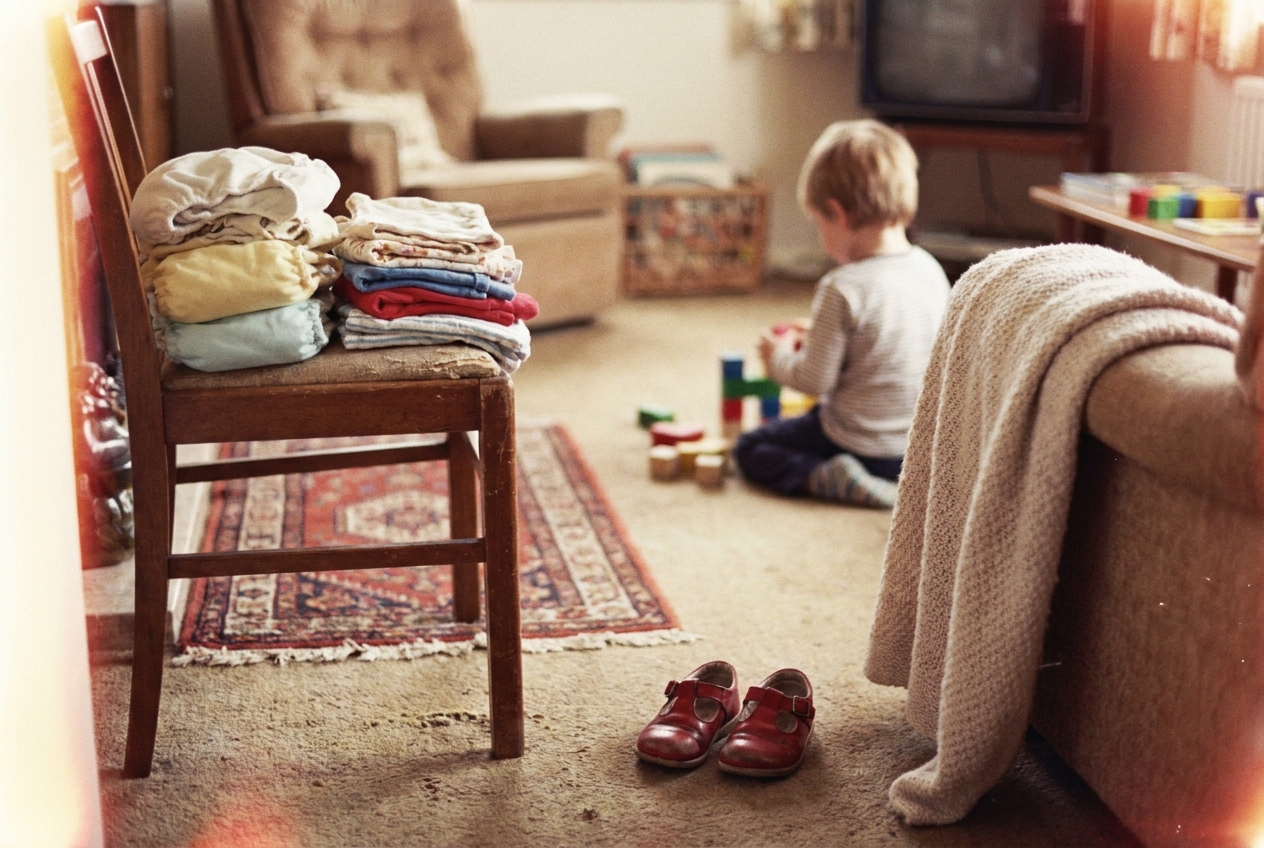
Your four-year-old is starting school in September and still in nappies. You have tried the three-day method twice and both times ended in laundry and tears. The health visitor said “he'll do it when he's ready.” He is not getting ready. The nursery has now suggested a conversation. Your friend's neurotypical son trained at 22 months and tells everyone. None of the books match the child sitting on the bathroom floor refusing to look at the potty.
Toilet training a SEND child is a different mechanical problem from toilet training a neurotypical child. Here is what UK clinical guidance actually says.
Why the usual advice fails for SEND children
Standard advice assumes capabilities a SEND child often does not have yet, in roughly this order. Conventional “readiness” teaching assumes that your child can:
- Feel the sensation of a full bladder or bowel (interoception).
- Connect that sensation to a verbal label (“need a wee”).
- Communicate it to an adult.
- Tolerate the sensory experience of the toilet: the cold seat, the splash, the wipe, the flush.
- Manage the transition (stop play, go to bathroom, pull down pants, sit).
- Tolerate the change of routine.
For many autistic and intellectually-disabled children, one or more of these is not fully available at 2–3 years. Standard methods, sticker charts and three-day reward intensives, assume all of them are. The result is predictable: nothing “clicks,” the family gives up, the child reaches school still in nappies.
It is never too late (and rarely too early)
UK clinical guidance has moved away from “wait-and-see” for SEND children. The Leicestershire Partnership NHS Trust autism toileting guidance puts it directly: “It is vital to say that it is never too early or too late to start the preparation for toilet training. While there is a temptation to delay toilet training with autistic children, clinical experience and research is now saying that starting earlier is better (before the age of two).” (Leicestershire Partnership NHS Trust. See References.)
ERIC, the UK children's continence charity, confirms it: children with additional needs can train, and almost always do, given the right approach and patience. Their helpline (0808 169 9949) is the single best UK starting resource. (ERIC. See References.)
Readiness signs: different from neurotypical
The typical readiness list is wrong for many SEND children. On the left, the sign the standard advice tells you to wait for. On the right, what it looks like in a SEND child.
The five blocks: which is yours
Stuck toilet training in a SEND child is almost always one of five blocks. Identifying yours is what makes the rest of the work possible.
- Sensory block. The toilet experience is unbearable: the cold seat, splashing water, the flush, the wipe, the smell. The child fights the room, not the training. Adjust the sensory inputs: a smaller insert seat, a step stool for feet, no flushing while the child is there, soft loo paper or wipes.
- Interoception block. The child cannot feel that they need to wee or poo. Build awareness explicitly: regular time prompts (every 90 minutes), name the sensation when it happens (“you're squeezing your legs together; that means wee”), and pair it with going.
- Communication block. The child knows but cannot tell you. Teach a sign, a card, a button, an AAC symbol. PECS-based toileting cards work for many non-speaking children.
- Constipation block. The child is constipated, often chronically. They withhold poo because it is painful; overflow soiling looks like failure but is the bowel doing what it can. See the section below.
- Routine and anxiety block. The toilet has become associated with anxiety, pressure, or shame. Reset: no charts, no praise overload, no questions, just the routine.
Most children stuck for months are stuck on two of these simultaneously. The work is to identify both.
What to try, in order
This is the general sequence used by UK paediatric continence services and ERIC. Adapt it for the specific blocks.
- Rule out constipation. GP review. If constipated, treat it (often with Movicol or similar); only return to training once the bowel is reliably emptying.
- Build familiarity, no pressure. Bring the child into the bathroom regularly. Let them flush, sit clothed, look at the seat. No expectation. One to two weeks.
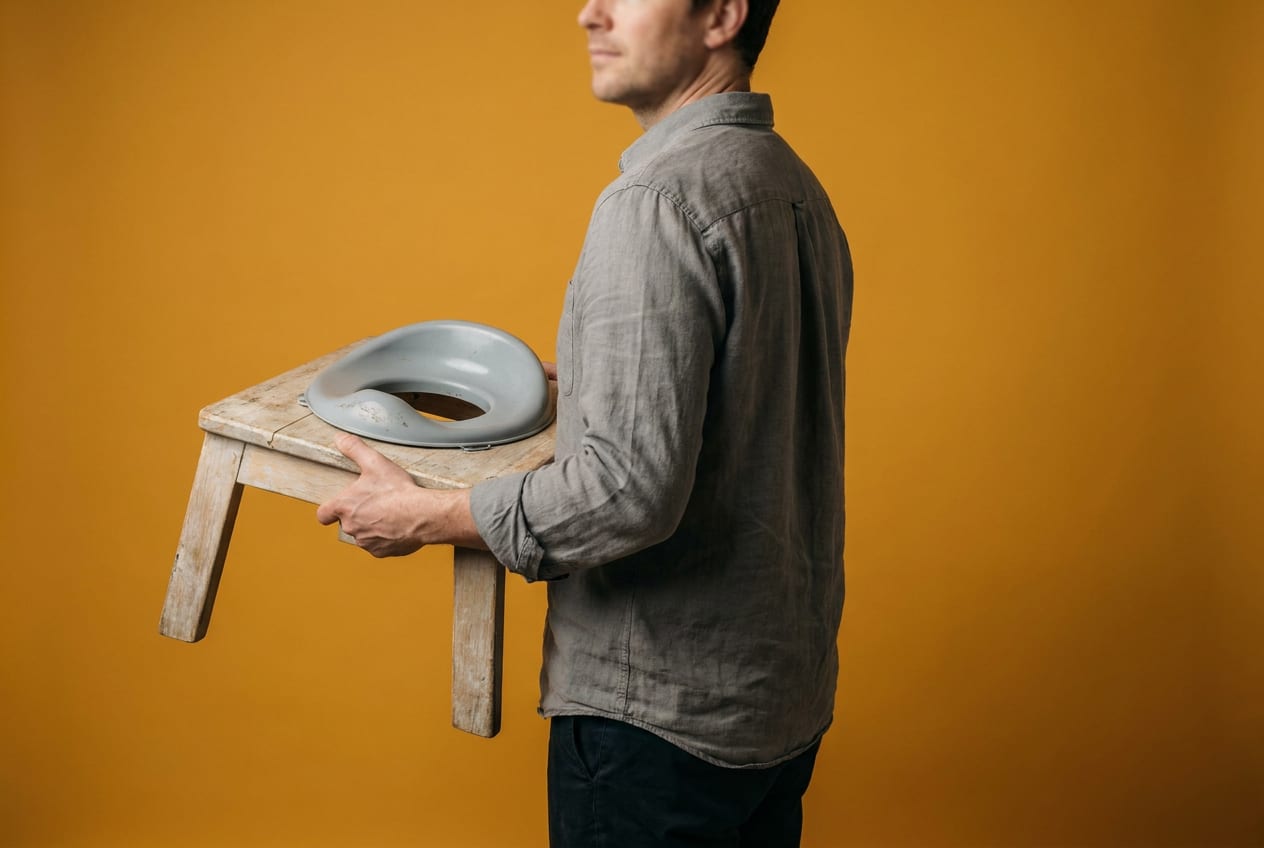
- Set up the right physical environment. Insert seat or potty. Step stool for feet (improves posture and pushing-out). Visual schedule by the toilet. Pictures or symbols if you use them.
- Move to underpants for short periods. Start with one hour after a meal. Build up.
- Use scheduled prompts. Sit on the toilet every 90 minutes, or 15 minutes after meals, or whenever the routine fits. Do not wait for the child to ask.
- Celebrate the right things. Sitting on the toilet is a win. Trying is a win. Do not over-celebrate; many autistic children are unsettled by big reward responses.
- Extend in steps: longer periods in underpants, then all morning, then all day, with nights last (usually 6–12 months after day training).
- If stuck for more than 4–6 weeks: specialist referral. NHS paediatric continence service, an OT for sensory, or ERIC.
One move gets skipped by most parents and recommended first by most clinicians: a step stool under the child's feet on the toilet. Feet flat on a surface let the pelvic floor relax. For many SEND children this single change turns the bathroom from impossible to workable.
Constipation: the most missed driver
Chronic constipation in SEND children is extremely common, frequently missed, and the single biggest reason toilet training stalls. The pattern runs like this:
- Pooing becomes painful, often after a single hard episode.
- The child withholds.
- Stool builds up; the rectum stretches.
- The sensation of needing to poo reduces, because the stretched rectum stops signalling.
- Watery overflow soils the underwear. It looks like loss of control and is actually impaction with overflow.
- The family thinks training is failing. Often training was not the issue.
NICE guideline CG99 on constipation in children sets the treatment pathway. Most cases need a disimpaction regime (often Movicol Paediatric over 2–3 weeks) followed by maintenance laxative use for months, until the rectum returns to size and signal. Parents are often surprised at the length of treatment. It is normal. (NICE CG99. See References.)
Do not push through toilet training while constipation is active. Treat first, train second.
School-side: what you can ask for
Schools have specific duties around toileting needs for SEND children, and those duties reach admissions as well as the school day.
A school cannot lawfully refuse your child a place because of nappies.
The UK guidance and law behind that:
- Equality Act 2010: a disabled child cannot lawfully be excluded from school or admissions because of toileting needs.
- Supporting pupils with medical conditions at school (DfE statutory guidance, 2014, updated): schools must support pupils with medical conditions including continence needs.
- SEND Code 2015: toileting is a recognisable area of need; reasonable adjustments and, where significant, EHCP provision apply.
What you can ask for:
- A care plan agreed with the school covering changes, timing, and the named staff.
- Scheduled toilet times built into the school day.
- A private space with toilet adaptations (step stool, grab rail, hand-held shower head where appropriate).
- Spare clothes and pads kept at school.
- Communication aids (visual schedules, symbols) used consistently across home and school.
- For older children with continued needs: continence products via the NHS, normally accessed through the local NHS children's continence service or health visitor.
If your child is older and still in nappies
Specific support exists. Do not assume the window has closed. For children over 4, or over 7 for night-time only, continuing in nappies or pads, the routes are:
- NHS paediatric continence service. Referral via GP or health visitor. Often the best single intervention. Provides assessment, a plan, and sometimes home visits.
- ERIC helpline (0808 169 9949) for advice and to identify your local services.
- Sensory OT if the block is clearly sensory.
- SaLT involvement if communication is the block, particularly for AAC users.
- NHS continence products for ongoing needs (free at the relevant age threshold, varying by ICB).
- Disability Living Allowance, mid- or high-rate care component, for children with significant continued continence needs.
What to do this week
Three things.
This article is general information about UK toileting support for SEND children. It has been reviewed by a UK SEND specialist but does not replace input from your GP, paediatric continence service, or ERIC.
Where this comes from
The sources behind every claim in this article.
- ERIC, the UK children's continence charity. Potty training children with additional needs; helpline 0808 169 9949.
- NHS autism toileting guidance. Leicestershire Partnership NHS Trust, Toilet training with an autistic child.
- NAS guidance. National Autistic Society, Toileting: a guide for parents and carers.
- NICE on constipation. NICE CG99, Constipation in children and young people.
- Schools and medical conditions. DfE, Supporting pupils at school with medical conditions. Equality Act 2010, section 20.
About the reviewer

Emma Owen
Owner of The SEN Support Studio
Former Local Authority SEN Advisor & specialist SEN teacher · 6+ years across SEN
Emma has 6+ years' experience across SEN as a teacher, Local Authority SEN Advisor and Trainer, and specialist SEN teacher. She has supported families through EHCPs, Annual Reviews, and tribunals, as well as sensory deep dives and personalised SEN Support. She works daily with complex needs including Autism, ADHD, SLCN, and sensory differences, and offers clear, practical, and personalised guidance to help parents understand their child and take confident next steps.
Scope of review: Emma reviews Remarkable Minds's content on EHCPs, annual reviews, transitions, sensory support, and parent advisory topics. She does not provide legal advice on tribunal proceedings; for that, contact IPSEA or SOSSEN.
Reviewed by Emma Owen ·