
It is the third morning this week that getting dressed has ended in screaming, a thrown shoe and a slammed door, over something you have watched your child do happily a hundred times before. The sticker chart is ignored. The time-out made it worse. “Because I said so” lit the fuse. You are reading this at quarter to eleven at night, half wondering what to actually do tomorrow morning and half wondering whether you are just too soft. You are not too soft. You are parenting a nervous system that reads ordinary requests as threats, and almost nothing you were taught about behaviour applies.
Is this really PDA, and is it even a real diagnosis?
PDA stands for Pathological Demand Avoidance, and the most useful starting point is what it is not. It is not a separate, formally diagnosable condition here. PDA does not appear in the two manuals UK clinicians diagnose from (ICD-11 and DSM-5), so the NHS and NICE do not recognise it as a standalone diagnosis (National Autistic Society, 2026). What that means in practice: your child is assessed for autism on the usual NHS pathway, and a clinician who sees a strong demand-avoidant pattern may record a “PDA profile” or “demand-avoidant profile” inside an autism diagnosis. Some do. Some do not use the term at all. It varies by area and by clinician.
So the honest position is this. The professional consensus is still forming, and reasonable clinicians disagree about how PDA should be described. The PDA Society describes it as a profile of autism, while noting that the picture is still being researched and that not everyone with the profile identifies as autistic (PDA Society, 2026). None of that uncertainty makes the thing you are living with at 8am any less real.
A missing label on a form does not stop the support. A good autism assessment should still describe the demand avoidance and the need for control, because the NHS autism guideline asks every assessment to produce a profile of a child's strengths and needs, not just a yes-or-no (NICE CG128, 2017). If you are at the start of this, the route is the standard one. Our answer on getting your child assessed for autism on the NHS walks through the referral.
The reframe that changes everything: can't, not won't
Read the avoidance as anxiety, not choice. That is the one shift everything else depends on. When your child refuses to put their shoes on, the behaviour you are seeing is closer to a fire alarm than a decision. A demand has landed, the nervous system has read it as a threat to being in control, and the body has gone into fight, flight, freeze or fawn before the thinking brain gets a vote.
The hard part is that the demand does not have to be unpleasant. It can be something your child wants to do. It can be a trip to the park they asked for five minutes ago. It can be praise. “Well done, you got dressed so quickly” can tip the same child straight into refusal, because the praise carries an expectation, and the expectation is the demand. Even your child's own stated plan (“I'm going to draw a dinosaur”) can become a trap the moment it feels like something they now have to do.
This is why “can't, not won't” is not a slogan. The reading you choose decides what every strategy below feels like.
Why the reward charts school recommends make it worse
The behaviour tools most schools reach for are built to increase control from the outside, and for a PDA child that control is the exact trigger. Sticker charts, token economies, time-out, taking points away, firm and consistent consequences: all of them work by raising the stakes on compliance. For most children that nudges behaviour along. For a child driven to avoid demands, it pours petrol on the fire. The PDA Society is blunt about it: rewards and consequences often fail because PDA children resist external control, and praise itself can become a demand (PDA Society, 2026).
Here is the part that is hard to hear in a school meeting. Schools will often say your child “just needs firmer, more consistent boundaries.” What that advice misses is that consistency delivered as pressure does not feel like safety to this child. It feels like a wall closing in, every day, in exactly the same place. The anxiety climbs, the trust with the adult drops, and the avoidance gets worse, not better. The thing that looked like a discipline problem was a demand problem all along.
None of this means no structure. It means structure that lowers anxiety rather than enforcing control. If your child holds it together in class and falls apart for you at home, that pattern is itself evidence worth naming: see why your child only has meltdowns at home.
The PANDA approach, applied to a real morning
The PDA Society sets out a low-demand approach under the word PANDA, and it is best used as a gentle way in rather than a checklist to get right (PDA Society, 2026). Here is what each letter means, and then the same getting-dressed flashpoint run two ways.
The same morning, two ways
The old way: “Come on, shoes on, we're late, I've asked you three times.” Standing over them. Voice tight. A countdown. The demand stacks up, the threat alarm goes off, and you have a child on the floor and a coat across the hall.
The PANDA way: you have already cut the morning to the two things that truly matter (out the door safely, shoes at some point). You leave the shoes by the door and say, to nobody in particular, “Hmm, shoes are over here when feet need them.” You potter. You give it a minute. You offer a choice that is not really about the shoes (“wonder if teddy wants to come in the bag or the buggy today”). Some mornings it works in ninety seconds. Some mornings it does not, and you adapt again. The goal is not a perfect script. It is less pressure in the room.
Declarative language: the words that lower the temperature
Declarative language means swapping direct instructions for statements and observations, so the words carry less demand. Instead of “put your coat on,” you say “your coat's by the door” or “it's gone cold out there today.” You are still pointing at the coat. You are just not handing your child an order to push back against. The practical source most parents find useful is Linda Murphy's Declarative Language Handbook, and it sits neatly alongside the NAS guidance on indirect communication and on dropping confrontational cues like eye contact or standing over a child (Murphy, 2023; NAS, 2026).
Softeners do a lot of the work. Reach for “maybe,” “I wonder,” “perhaps,” and talk about the thing rather than the child.
Five swaps to screenshot
- “Put your shoes on” becomes “your shoes are by the door.”
- “Come and eat” becomes “I've put some toast on the table.”
- “Stop hitting your brother” becomes “ow, that looked like it hurt.”
- “Do your homework” becomes “I wonder where the maths sheet got to.”
- “Get in the bath” becomes “the water's warm if anyone fancies it.”
A warning, because the swaps look like magic and are not. Declarative language is a tool inside a low-demand approach, not a phrasebook that unlocks compliance. It works because it lowers the felt demand, so if you deliver “your shoes are by the door” in the same tight, hovering, hurry-up voice, your child will hear the demand underneath the softer words.
The drop in pressure is the active ingredient. The exact words are just how you carry it.
In the meltdown: protect, defuse, repair
When the meltdown has already started, your calm body is the main tool you have. Lower your voice. Slow everything down. Cut your words right back and drop demands to as close to zero as you can manage. Make the space safe (move the hard furniture, move a younger sibling) and wait. You are not rewarding the meltdown by going gentle. A meltdown is an involuntary flood, not a performance staged to get something, and you cannot reason or teach your way through a flood.
That distinction matters, because parents are often told not to “give in” mid-meltdown. A tantrum is goal-directed: it stops when the child gets the thing or realises they will not. A meltdown is overwhelm: it has to run its course, and adding demands extends it. If you want the difference laid out plainly, see the difference between a meltdown and a tantrum and how long an autism meltdown usually lasts.
The repair comes later, not in the red zone. Once your child is back to baseline (and that can be hours, not minutes) you can offer something short and non-shaming: “that was a hard morning, I'm glad we got through it together.” No post-mortem. The repair rebuilds the trust the meltdown frayed, and trust is the currency this whole approach runs on.
Getting support: school, the law, and what 2026 changes
As of June 2026, the law you can lean on is the law that already exists. Schools must make reasonable adjustments so a disabled child is not put at a substantial disadvantage, and an autistic child with a PDA profile is covered by that duty (Equality Act 2010, s.20). Support at school runs through the graduated approach (the assess-plan-do-review cycle that schools use to identify and meet needs) and, where the need is greater than mainstream can usually provide, you or your child can ask the council for an Education, Health and Care needs assessment (Children and Families Act 2014, s.36).
What is reasonable to ask school for, in PDA terms:
- A low-demand, collaborative approach, written into the support plan rather than left to one understanding teacher.
- Reduced and disguised demands, and flexibility over rigid whole-class rules where they spike anxiety.
- Recognition of masking and the after-school collapse it causes, so the calm school report is not used to argue there is no need.
- A quiet, low-stimulation space your child can withdraw to before the overwhelm tips over.
Useful neighbours to this: what reasonable adjustments school should make for an autistic child, getting a quiet space for sensory breaks, and, if you decide to apply, how to write a parental request for an EHC needs assessment. If anxiety is starting to keep your child off school altogether, what to do when your child can't attend due to anxiety is the next stop.
What 2026 changes, and what it doesn't
You will have seen headlines about EHCPs being cut. Here is the steady version. The Schools White Paper (“Every Child Achieving and Thriving,” published February 2026) brings in a new Individual Support Plan for children with additional needs, and over the longer run it narrows EHCPs toward the most complex needs (DfE, 2026). But the timeline is slow and the protections are real: no EHCP changes begin before September 2030, current plan holders are protected under a “triple lock,” and the government has said no child loses the support that is working for them. So treat today's rights as fully live, and treat the reform as a direction of travel, not a reason to hold back from requesting what your child needs now.
Looking after yourself (and managing judgement)
Low-demand parenting is exhausting, and it is routinely misread. Relatives see you offering choices and call it spoiling. A stranger in a supermarket sees you go gentle in a meltdown and reads it as no boundaries. School sees a calm child in class and a different story at home and wonders, out loud sometimes, whether the problem is the parenting. Name that to yourself plainly, because the judgement is real and it lands on top of an already hard day.
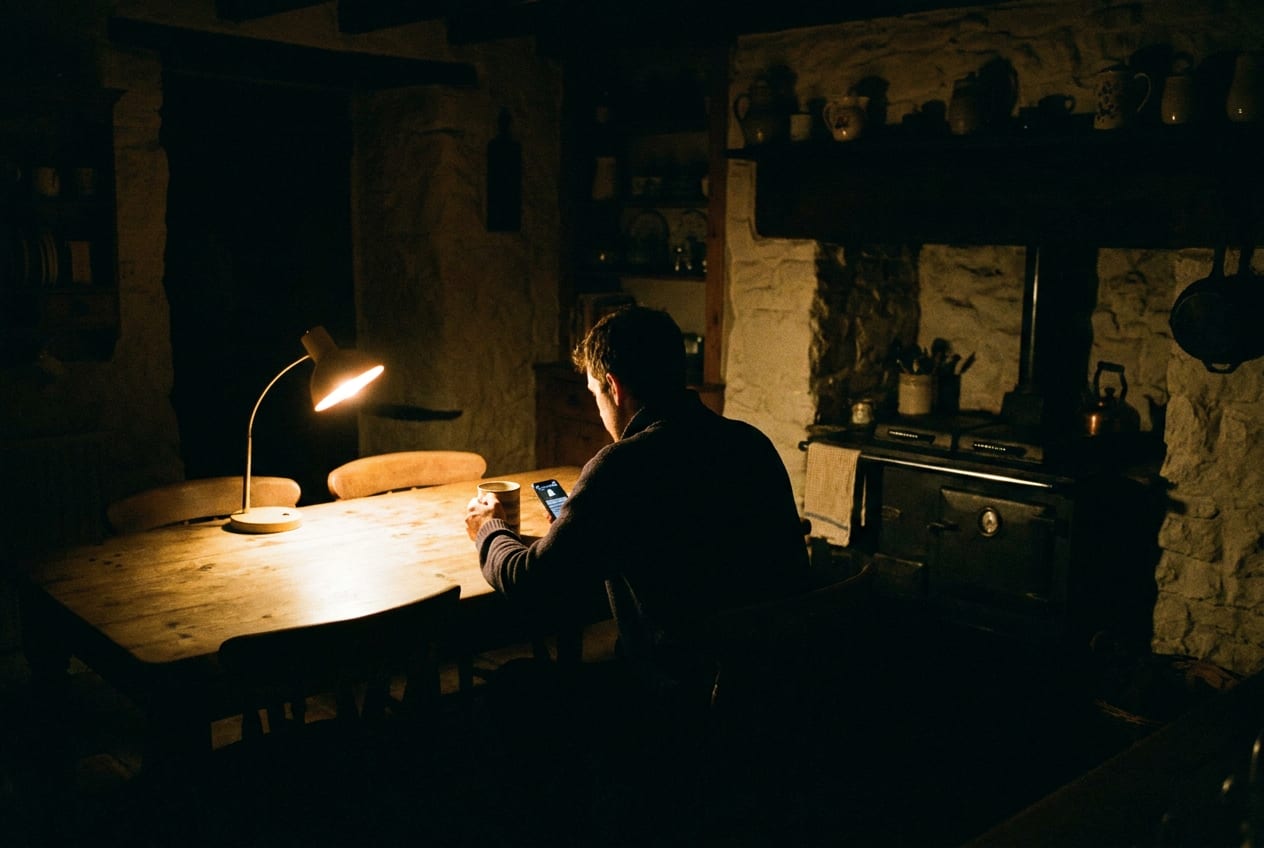
The data helps here. The PDA Society's “Being Misunderstood” survey (online, March 2018, 1,445 respondents) found 70% of children with PDA were either out of school or regularly struggling to attend, and 7% of those who had been at school had been permanently excluded (PDA Society, 2018). That is not 1,445 families who all parented badly. That is the profile, showing up the same way in home after home. If your home is in that statistic, it is evidence, not a verdict on you.
For connection and practical backup, the PDA Society runs a parent community and information service, and Contact supports families of disabled children across the UK. Your own wellbeing counts as a real need, not an indulgence. The pattern you are seeing at home is also why your child may be masking at school and falling apart at home and why transitions between activities can be such flashpoints.
This is general information, not a clinical or legal opinion. It has been reviewed by a qualified UK SEN specialist but does not replace advice from your GP, your child's school, or a solicitor on your specific case. If you or your child are in crisis: Samaritans 116 123 (24/7); Papyrus HOPELINE247 0800 068 4141 (under 35s); Shout, text 85258. In immediate danger call 999 or go to A&E.
Where this comes from
- PDA Society, About autism and PDA and Parenting a PDAer (2026). PDA as a profile of autism; rewards and consequences often fail; low-demand, trust-based, indirect approaches recommended.
- PDA Society, PANDA as a way in (2026). The low-demand approach: Pick battles, Anxiety management, Negotiate and collaborate, Disguise and manage demands, Adapt.
- PDA Society, Being Misunderstood (online survey, March 2018, 1,445 respondents). 70% of children with PDA out of school or struggling to attend; 7% of those who had been at school permanently excluded.
- National Autistic Society, Demand avoidance (2026). PDA not recognised in ICD or DSM; some receive an autism diagnosis with a PDA profile noted; reduce demands, collaborate, communicate indirectly, minimise confrontational cues.
- NICE guideline CG128, Autism spectrum disorder in under 19s: recognition, referral and diagnosis (2017). The NHS assessment pathway; every assessment produces a profile of strengths and needs.
- Linda Murphy, Declarative Language Handbook (2023). Statements, observations and softeners reduce perceived demand.
- Department for Education, Schools White Paper Every Child Achieving and Thriving (February 2026). Individual Support Plans; EHCPs retained for the most complex needs; no EHCP changes before September 2030; “triple lock” for current holders.
- Equality Act 2010, s.20 (reasonable adjustments); Children and Families Act 2014, s.36 (EHC needs assessment); SEND Code of Practice 0 to 25 (the graduated approach).
About the reviewer

Emma Owen
Owner of The SEN Support Studio
Former Local Authority SEN Advisor & specialist SEN teacher · 6+ years across SEN
Emma has 6+ years' experience across SEN as a teacher, Local Authority SEN Advisor and Trainer, and specialist SEN teacher. She has supported families through EHCPs, Annual Reviews, and tribunals, as well as sensory deep dives and personalised SEN Support. She works daily with complex needs including Autism, ADHD, SLCN, and sensory differences, and offers clear, practical, and personalised guidance to help parents understand their child and take confident next steps.
Scope of review: Emma reviews Remarkable Minds's content on EHCPs, annual reviews, transitions, sensory support, and parent advisory topics. She does not provide legal advice on tribunal proceedings; for that, contact IPSEA or SOSSEN.
Reviewed by Emma Owen ·